Finding the right condolence messages can feel difficult because no sentence can remove someone’s grief. The goal isn’t to explain the loss, force positivity, or find perfect words. A meaningful condolence message simply acknowledges what happened, expresses genuine care, and reminds the grieving person that they are not alone.
The best message is usually short, sincere, and personal. You can mention the person who died, share a kind memory, offer specific help, or let the bereaved person know you are thinking of them. Even a simple message like “I’m so sorry for your loss. I’m thinking of you and your family” can convey compassion when it comes from the heart.
This guide includes 100+ condolence messages for texts, sympathy cards, friends, family members, coworkers, parents, spouses, children, sudden loss, religious situations, and more. It also explains how to write a condolence message and which phrases are better left unsaid.
Read More: Funny Family Quotes: 20+ Sayings Every Family Gets
Short Condolence Messages

Short messages are often appropriate when you do not know the grieving person well, when you are responding to an announcement, or when you want to offer immediate support without overwhelming them.
- I’m so sorry for your loss.
- My deepest condolences to you and your family.
- Thinking of you during this difficult time.
- I’m keeping you and your loved ones in my thoughts.
- Please accept my heartfelt sympathy.
- I’m so sorry you’re going through this.
- Sending you love, comfort, and strength.
- My heart goes out to you and your family.
- Wishing you peace and comfort in the days ahead.
- I’m here for you, today and always.
- I’m thinking of you with great care and sympathy.
- Please know that you are not alone.
- I’m deeply sorry to hear about your loss.
- Sending my sincere condolences.
- May the memories you shared bring you comfort.
- I’m holding you close in my thoughts.
- I wish I had the right words, but please know I care.
- I’m sorry. I’m here whenever you need me.
- May you find comfort in the love around you.
- With sympathy and heartfelt care.
Read More: Resilience and Perseverance Quotes: Words for When You Want to Quit
Heartfelt Condolence Messages
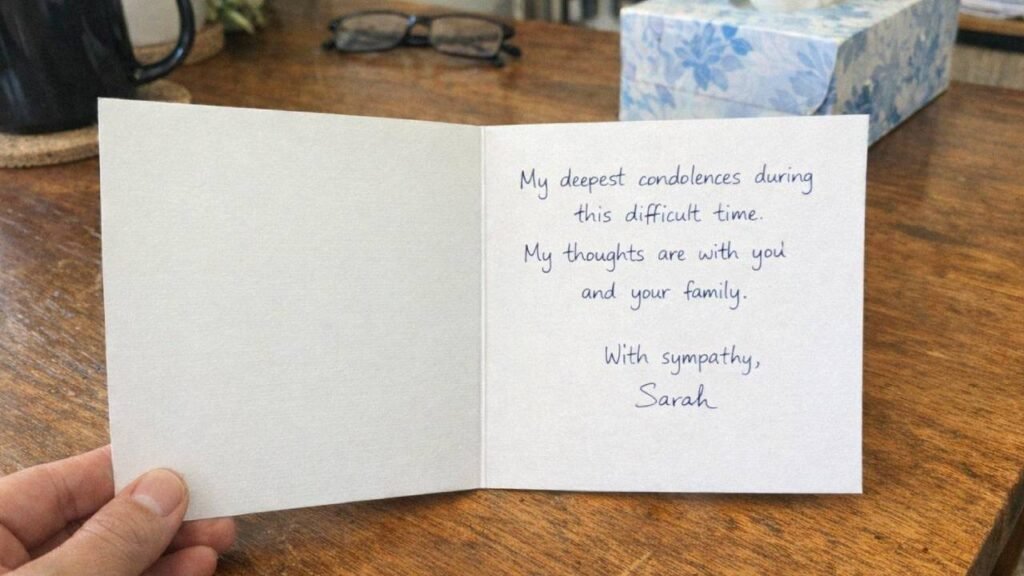
A heartfelt condolence message can be slightly longer and more personal. It should focus on the grieving person and the relationship they had with the deceased.
- I’m deeply sorry for your loss. I hope the love and memories you shared bring you comfort during this painful time.
- My heart is with you and your family. Please take all the time you need to grieve, rest, and care for yourself.
- I wish I could take away some of your pain. Since I cannot, please know that I’m here to listen, help, or simply sit with you.
- Your loved one made a meaningful difference in the lives of many people. Their kindness and memory will not be forgotten.
- I’m so sorry you have to face this loss. I hope you feel surrounded by people who care about you and will continue to support you.
- There are no perfect words for a loss like this. I just want you to know that I’m thinking of you and sending you love.
- I hope the memories of the good times bring moments of peace during the difficult days ahead.
- Please don’t feel that you need to respond. I only wanted to remind you that you are loved and remembered.
- I’m sorry for the sadness you are carrying. I hope you have space to grieve in your own way and support whenever you need it.
- Your loss matters, your grief matters, and you do not have to go through this alone.
Read More: Good Morning Quotes for Her: Sweet, Funny, and Short Ways to Start Her Day
Condolence Text Messages
A condolence text message should be clear, respectful, and easy to receive. Avoid sending a long explanation about your own feelings. The message should center on the person who is grieving.
- I just heard the news, and I’m so sorry. I’m thinking of you and your family.
- I don’t know what to say, but I want you to know I care. I’m here if you need anything.
- I’m sending you a big hug. You don’t need to reply—just know I’m thinking of you.
- I’m so sorry about your loss. Would it help if I brought dinner over this week?
- I’m thinking of you today. I know this must be incredibly difficult.
- I’m here for calls, quiet company, errands, or anything else that might make the next few days easier.
- I’m so sorry. I remember how much your loved one meant to you, and I’m holding you in my thoughts.
- You and your family are in my heart. Please let me know if I can help with something specific.
- I wish I could be there in person. Until then, I’m sending love and support.
- I’m sorry you’re facing this. I’ll check in again soon, but there is no pressure to respond.
Read More: Self Captions for Instagram for Girls (Cute, Attitude, Aesthetic)
Condolence Messages for a Friend
When a friend experiences a loss, your message can be warm and familiar. Mentioning a shared memory or offering practical support can make the message feel less formal.
- I’m so sorry, my friend. I know how much your loved one meant to you, and I’m here for you through every part of this.
- You don’t have to be strong around me. You can cry, talk, stay quiet, or say nothing at all. I’m not going anywhere.
- I wish I could make this pain easier. For now, I can listen, help with daily tasks, or simply keep you company.
- I’m thinking about you and remembering the love your family shared. Please lean on me whenever you need to.
- I’m so sorry you’re going through this. I’ll keep checking in, even after the first difficult days have passed.
- You have supported me through hard times, and I want to support you now. Tell me what would make today a little easier.
- I know there is nothing I can say to fix this, but I hope my presence reminds you that you are deeply loved.
- I’m here for the practical things, the emotional things, and the moments when you simply need someone nearby.
- I’m sending you love and strength. Take each day at your own pace.
- Your grief may change from day to day, but my support will remain steady.
Read More: Caption For Family Picture: 251 Cute, Funny & Heartfelt Ideas
Condolence Messages for a Family Member

A family member may need a message that recognizes the shared loss and the importance of family support.
- My heart is with all of us as we grieve this loss. I’m grateful for the memories we share and the love that connects our family.
- I’m so sorry. I know how much this loss hurts, and I hope we can support one another through the days ahead.
- Our family has lost someone very special. Their love, stories, and influence will remain part of us.
- I’m thinking of you with love and sadness. Please remember that you do not have to carry this grief alone.
- I hope we can find comfort in being together, remembering our loved one, and caring for one another.
- I’m here for whatever you need, whether that means talking about our memories or simply spending time together.
- This is a painful time for our family, but we can face it with patience, compassion, and mutual support.
- I’m sending you love and strength. I hope the memories we hold close bring comfort in the days ahead.
Condolence Messages for the Loss of a Mother
The loss of a mother can affect every part of a person’s life. A message should acknowledge the importance of that relationship without assuming exactly how the person feels.
- I’m deeply sorry for the loss of your mother. Her love and influence will always remain part of your life.
- Your mother’s care helped shape the person you are. I hope her memory brings you comfort in the days ahead.
- I’m thinking of you and your family with heartfelt sympathy. I wish you peace as you remember your mother.
- I’m so sorry. A mother’s place in our lives is unique, and I know this loss must be incredibly painful.
- May the memories of your mother’s love, wisdom, and kindness stay close to you always.
- I hope you feel surrounded by the love your mother gave you and the people who care about you now.
- I’m here to listen whenever you want to talk about your mother or share memories of her.
- Please accept my deepest condolences on the loss of your mother. I’m holding you in my thoughts.
Condolence Messages for the Loss of a Father
A father’s death can bring grief, confusion, and a deep sense of change. A thoughtful message should offer support without making assumptions.
- I’m so sorry for the loss of your father. I hope his memory and the lessons he shared continue to guide and comfort you.
- Your father’s influence will remain in the people he loved and the lives he touched. Please accept my heartfelt condolences.
- I’m thinking of you during this difficult time. I hope you find comfort in the memories you made together.
- I’m deeply sorry. Losing a father can leave a space that words cannot describe, and I’m here for you.
- May the love, wisdom, and memories your father gave you remain a source of strength.
- I hope you have the time and support you need to grieve your father in your own way.
- I’m here if you want to talk about him, remember him, or simply have someone listen.
- Sending you and your family my deepest sympathy for the loss of your father.
Read More: Lip Fillers Gone Wrong
Condolence Messages for the Loss of a Spouse or Partner
The loss of a spouse or partner can change someone’s daily life, identity, and sense of the future. Avoid suggesting that the person should move on quickly or “stay strong.”
- I’m deeply sorry for the loss of your beloved partner. I’m thinking of you with care and compassion.
- I cannot imagine how difficult this must be. Please know that I’m here to support you in whatever way I can.
- The love you shared was meaningful and real. I hope your memories bring comfort, even during the hardest moments.
- I’m so sorry you have to face this loss. You do not need to have everything figured out right now.
- I’m here to help with meals, errands, calls, or quiet company whenever you need it.
- Please take each day as it comes. There is no correct timetable for grief.
- I’m holding you in my thoughts and wishing you comfort, patience, and support.
- Your partner’s memory will continue through the love, moments, and life you shared together.
Condolence Messages for the Loss of a Child
The death of a child is an especially devastating loss. Keep the message gentle and avoid trying to explain the tragedy.
- I am so deeply sorry for the loss of your child. There are no words that can express how much I care.
- Your child’s life mattered, and their memory will always matter. I’m holding you and your family in my thoughts.
- I wish I could ease even a small part of your pain. Please know that you are not alone.
- I’m thinking of you with love and profound sympathy. There is no need to respond to this message.
- I will remember your child with care and respect. If you ever want to share memories, I will listen.
- I’m so sorry. I’m here for you now and in the weeks, months, and years ahead.
- Please accept my deepest condolences. I hope you receive the patience, care, and support you deserve.
- Your child’s life brought meaning and love into this world. I’m deeply sorry for your loss.
Read More: Face Shape Chart: All 8 Types Compared
Condolence Messages for the Loss of a Sibling
- I’m so sorry for the loss of your brother. I hope the memories you shared bring comfort in the days ahead.
- My heart goes out to you and your family after the loss of your sister.
- I know your sibling held a special place in your life. I’m here whenever you need support.
- I’m thinking of you and remembering the bond you shared with your brother.
- Please accept my heartfelt sympathy for the loss of your sister. I’m sending you love and strength.
- I hope you find comfort in the memories, laughter, and experiences you shared.
Condolence Messages for the Loss of a Grandparent
- I’m sorry for the loss of your grandparent. I hope the memories of their love and guidance remain close to your heart.
- Your grandparent’s life touched your family in meaningful ways. May those memories bring you comfort.
- I’m thinking of you as you remember someone who helped make your life what it is today.
- Please accept my sincere condolences. I hope you find peace in the stories and moments you shared.
- I’m so sorry. Grandparents often leave behind a special kind of love that stays with us for life.
Condolence Messages for a Coworker
A message to a coworker should be respectful, supportive, and professional without sounding cold or overly formal.
- I’m very sorry for your loss. Please accept my sincere condolences.
- My thoughts are with you and your family during this difficult time.
- Please don’t worry about work right now. We will do what we can to support you.
- I’m sorry you’re going through this. If you need help with any work responsibilities, please let me know.
- Wishing you comfort and peace as you take time to grieve.
- Please accept my deepest sympathy. There is no need to respond.
- I’m thinking of you and your family and sending my sincere condolences.
- We are sorry for your loss and want you to know that you have our support.
Professional Condolence Messages
Use professional condolence messages for clients, business partners, managers, employees, teachers, or acquaintances.
- Please accept my deepest condolences on your loss. My thoughts are with you and your family.
- I was saddened to hear about your loss. Wishing you peace and comfort during this difficult time.
- On behalf of our team, please accept our sincere sympathy. We are thinking of you.
- I’m sorry to hear of your loss. Please take the time you need, and know that we are here to support you.
- Sending my sincere condolences and wishing you strength in the days ahead.
- Please accept our heartfelt sympathy. Your family is in our thoughts.
- I’m deeply sorry for your loss. If there is anything we can do to assist you professionally, please let us know.
Religious Condolence Messages
Religious messages can be comforting when you know the grieving person welcomes faith-based language. Avoid using religious statements if you are unsure of their beliefs.
Christian Condolence Messages
- May God surround you with His love and give you comfort during this difficult time.
- Keeping you and your family in my prayers. May the Lord give you strength and peace.
- May God’s presence comfort you and may the memories of your loved one remain a blessing.
- I’m praying for peace, strength, and comfort for you and your family.
- May your faith and the love of those around you carry you through this difficult season.
Muslim Condolence Messages
- Inna lillahi wa inna ilayhi raji’un. May Allah forgive your loved one and grant them Jannah.
- May Allah give you and your family sabr, strength, and comfort during this difficult time.
- May Allah have mercy on the deceased, forgive their shortcomings, and grant patience to everyone who is grieving.
- My deepest condolences. May Allah ease your sorrow and reward you for your patience.
- May Allah grant your loved one peace and give your family strength and comfort.
Jewish Condolence Messages
- May their memory be a blessing.
- I’m so sorry for your loss. Wishing you comfort among the mourners of Zion and Jerusalem.
- May you be surrounded by love and support during this difficult time.
- Please accept my heartfelt condolences. I’m thinking of you and your family.
General Spiritual Condolence Messages
- May peace surround you and your family during this painful time.
- I hope you find comfort in love, memory, and the support of those around you.
- May your loved one’s spirit and memory continue to bring light into your life.
- Wishing you peace, healing, and strength as you move through your grief.
Read More: New Driving Rules 2026
Non-Religious Condolence Messages
If you do not know someone’s beliefs, a neutral message is often the safest and most respectful choice.
- I’m so sorry for your loss. I’m thinking of you and your family.
- I hope you find comfort in the people who care about you.
- I’m sending you love and support during this difficult time.
- May the memories you shared bring moments of peace.
- I’m here to listen and help in any way I can.
- Your loved one will be remembered with care and respect.
- I’m deeply sorry. Please take the time you need, and know that you are not alone.
Condolence Messages for a Sympathy Card
A sympathy card allows you to write a little more than a text. Begin with a personal greeting, express sympathy, mention a positive memory if appropriate, and close with a supportive sentence.
Example 1
Dear [Name],
I was so sorry to hear about the loss of [Name]. They brought kindness and warmth to the people around them, and I feel grateful to have known them. Please know that you and your family are in my thoughts. I’m sending you love and wishing you comfort in the days ahead.
With heartfelt sympathy,
[Your Name]
Example 2
Dear [Name],
Please accept my deepest condolences. I know this is an incredibly difficult time, and I hope the memories you shared with [Name] bring you comfort. If there is anything I can do to help, please know that I’m here.
With sympathy,
[Your Name]
Example 3
Dear [Name],
I’m thinking of you and your family with great care. [Name] will be remembered for their kindness, generosity, and the love they gave to others. May those memories remain close to you always.
With sincere condolences,
[Your Name]
How to Write a Condolence Message
A useful condolence message usually includes three or four simple elements:
- Acknowledge the loss.
Say that you are sorry and recognize what happened. - Express genuine care.
Tell the person that you are thinking of them or that they matter to you. - Mention the deceased when appropriate.
Using the person’s name can make the message feel personal and respectful. - Offer specific support.
Instead of saying only “Let me know if you need anything,” offer something practical. - Avoid demanding a response.
Grieving people may not have the energy to reply.
A Simple Condolence Message Formula
You can use this structure:
“I’m so sorry for the loss of [Name]. I’m thinking of you and your family. I remember [one kind or meaningful detail]. I’d like to help by [specific offer]. Please don’t feel any pressure to respond.”
For example:
“I’m so sorry for the loss of your father. I’m thinking of you and your family. I’ll always remember how warmly he welcomed everyone. I can bring dinner on Thursday if that would help. You don’t need to reply.”
What Makes a Condolence Message Meaningful?
It Is Sincere
You do not need to sound poetic. Honest, simple language is often more comforting than a dramatic statement.
It Acknowledges the Loss
Avoid pretending that everything is normal. Naming the loss respectfully shows that you recognize the person’s pain.
It Avoids Comparisons
Even if you have experienced grief yourself, your experience may not be the same. Instead of saying, “I know exactly how you feel,” say, “I can’t know exactly what this feels like, but I’m here to listen.”
It Offers Practical Help
Grief can make ordinary tasks feel difficult. A specific offer is easier to accept than a broad promise.
Helpful examples include:
- “I can bring dinner tomorrow.”
- “I can pick up groceries this weekend.”
- “I can drive you to the service.”
- “I can help with school pickups.”
- “I can handle the phone calls you have been putting off.”
- “I can sit with you if you do not want to be alone.”
It Allows the Person to Grieve Differently
Some people want to talk. Others need silence, privacy, or time. A good message does not pressure someone to respond or recover quickly.
What Not to Say in a Condolence Message
Some phrases are common but may unintentionally minimize grief or make the person feel misunderstood.
Avoid: “Everything happens for a reason.”
This may sound reassuring to you, but it can feel dismissive to someone who is grieving. You do not need to explain why the death happened.
Try instead:
“I’m so sorry. I know this is painful, and I’m here for you.”
Avoid: “At least they lived a long life.”
A long life does not make a loss painless.
Try instead:
“I hope the many years and memories you shared bring you comfort.”
Avoid: “I know exactly how you feel.”
Even when you have experienced loss, each relationship and grief experience is different.
Try instead:
“I can’t know exactly what you’re feeling, but I’m here to listen.”
Avoid: “You need to be strong.”
Grieving people do not need to perform strength for others.
Try instead:
“You do not have to handle everything alone.”
Avoid: “They are in a better place.”
This may be appropriate for someone who shares your religious beliefs, but it can be uncomfortable if their beliefs are unknown.
Try instead:
“I’m thinking of you and wishing you peace.”
Avoid: “You will get over this.”
Grief is not something a person simply gets over. People learn to live with loss in different ways and at different speeds.
Try instead:
“Take all the time you need. I’ll continue to support you.”
Avoid asking for unnecessary details
Questions about how someone died, medical treatment, or family conflict may feel intrusive. Let the grieving person decide what they want to share.
When Should You Send a Condolence Message?
Send a message when you hear about the loss, even if you do not have perfect words. A brief, sincere message is usually better than waiting so long that the person feels forgotten.
You can send condolences through:
- Text message
- Handwritten sympathy card
- Phone call
- Private social media message
- Obituary or memorial page
- In-person conversation
If you send a public social media comment, keep it brief and avoid mentioning details about the death that the family has not shared publicly. A private message is usually more appropriate for personal or sensitive details.
Is It Appropriate to Send Condolences by Text?
Yes. A condolence text can be appropriate, especially when you cannot visit in person or when the relationship is primarily digital. The message should be sincere and should not require the grieving person to respond.
A text is especially useful when:
- You have just learned about the death.
- You live far away.
- The person prefers digital communication.
- You want to offer immediate support.
- You plan to follow up with a call, card, or visit.
A handwritten card or personal phone call may be more appropriate for a close relationship, but there is no single method that works for every situation. Modern etiquette guidance emphasizes sincerity and choosing a communication method that fits the relationship.
What If You Did Not Know the Person Who Died?
You can still offer condolences based on your relationship with the grieving person.
For example:
“I never had the opportunity to meet your mother, but I know how much she meant to you. I’m so sorry for your loss.”
Or:
“Although I did not know your father personally, I can see how deeply he influenced your life. Please accept my sincere condolences.”
You do not need to invent a memory or make a personal claim about the deceased.
What If You Do Not Know What to Say?
You can be honest:
“I don’t have the right words, but I’m so sorry for your loss and I’m thinking of you.”
This is often better than avoiding the person completely. Grief-support guidance commonly encourages people to say something sincere, listen carefully, mention the deceased respectfully, and offer specific help rather than trying to solve the grief.
How to Follow Up After Sending Condolences
Support should not always end after the funeral or first message. Many grieving people receive attention immediately after a death and then experience silence later.
You can follow up by saying:
- “I’ve been thinking about you. How are you managing today?”
- “No need to respond—I just wanted you to know you’re remembered.”
- “I’m going to the grocery store. Can I bring you anything?”
- “Would you like company this weekend?”
- “I remember that this week may be especially difficult for you.”
- “I’m here, even if you do not feel like talking.”
Do not treat a lack of response as rejection. The person may be exhausted, overwhelmed, or unable to communicate.
Frequently Asked Questions About Condolence Messages
What is the best condolence message?
A strong condolence message is sincere, simple, and personal. You can say, “I’m so sorry for your loss. I’m thinking of you and your family, and I’m here if you need support.”
What is a good short condolence message?
“Please accept my deepest condolences. I’m thinking of you and wishing you comfort during this difficult time.”
What should I say instead of “sorry for your loss”?
You can say, “I’m deeply sorry,” “I’m thinking of you,” “My heart goes out to you,” or “I’m here to support you.” You can also mention the deceased by name or share a respectful memory.
Is it okay to send a condolence message by text?
Yes. A text is appropriate when it fits the relationship or when you need to offer immediate support. Keep it sincere, brief, and free from pressure to reply.
Should I mention the person who died by name?
Usually, yes. Mentioning the deceased respectfully can show that you recognize the person’s importance. However, follow the family’s lead if the death is sensitive or details have not been shared publicly.
How long should a condolence message be?
There is no fixed length. A few sincere sentences are often enough. A sympathy card may contain a longer personal message, while a text may be only one or two sentences.
Should I offer help in a condolence message?
Yes, but make the offer specific. “I can bring dinner on Friday” is more useful than “Let me know if you need anything.”
What should I avoid saying to someone who is grieving?
Avoid minimizing phrases such as “Everything happens for a reason,” “At least they lived a long life,” and “You need to be strong.” Avoid comparing their grief to yours or offering explanations for the death.
What if I sent a message late?
It is still worthwhile to reach out. You can say, “I’m sorry I did not contact you sooner. I’ve been thinking of you and wanted you to know I care.”
What is an appropriate condolence message for someone of another faith?
Use neutral language unless you know the person welcomes religious expressions. You can say, “I’m so sorry for your loss. I’m thinking of you and your family and wishing you peace and comfort.”
Final Thoughts
The best condolence messages do not attempt to erase grief. They acknowledge the loss, honor the relationship, and offer steady human support. You do not need a perfect quote or an elaborate paragraph. A sincere sentence, a specific act of help, or a thoughtful follow-up can mean more than carefully polished words.
When in doubt, keep your message simple:
“I’m so sorry for your loss. I’m thinking of you and your family. I’m here for you, and I’ll continue to check in.”
That kind of message is respectful, compassionate, and meaningful when someone needs support most.
1 thought on “Condolence Messages: 100+ Heartfelt Words for Any Loss”